NZ Trailer Boat Checklist: Bungs, Bilge Pumps, Cleats, Fenders and Safety Rules
A practical checklist for New Zealand trailer boats: checking and fitting the bung before launch, choosing and testing an automatic bilge pump, drain outlets, cleats, fairleads, fenders and docking lines, the trailer and outboard – plus the Maritime NZ lifejacket rule and the two-ways-to-call-for-help advice, with links to the official pages.

In this guide
Before you back down the ramp: put the bungs in and check they're secure, make sure the bilge is clean and dry and the bilge pump works, and check the outboard, pull cord, kill switch, throttle and gear shift – these are all on Maritime NZ's checklists. Have docking lines and fenders ready, carry a bailer or bucket, and brief your crew. Everyone on a boat 6 metres or under must wear a lifejacket when it's underway (from 9 October 2026), and you should carry two ways to call for help that work when wet.
Most trailer-boat problems start before the boat even floats: a forgotten bung, a bilge pump that's quietly stopped working, or no lines ready when you come alongside the jetty. This checklist pulls together Maritime NZ's advice with the deck hardware that makes launching and retrieving easier, so the day starts – and ends – smoothly.
1. At home: prep the boat
Maritime NZ's Safer Boating Guide lists the basics for an annual check: make sure the bung is in good condition, check the hull for damage, keep the bilges clean and dry, test the steering, check fuel lines for leaks, charge the batteries and test the electrics and lights (Maritime NZ). It also recommends an annual engine service with regular visual checks between services (Maritime NZ).
- Outboard: check the outboard, pull cord, kill switch, throttle and gear shift all work, then start it and make sure cooling water is flowing (Maritime NZ). A weak tell-tale points to the impeller – see our outboard impeller guide.
- Trailer: check the rollers, winch strap and lights – our boat trailer rollers guide covers rollers like these ribbed wobble rollers. A tilt ram support holds a single-ram outboard up on the road – take it off before launching.
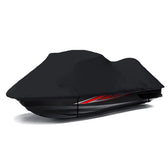
- Cover: a full outboard motor cover keeps rain, dust and sun off the motor between trips.
2. The bung: check it, fit it, check again
A missing bung is the classic ramp mistake. Maritime NZ's launch checklist starts with "put in bungs and check they are secure" (Maritime NZ). Many trailer-boat owners pull the bung after retrieving to let water drain on the way home – which is exactly why it needs checking every time before launch. Keep a spare in the boat, and hang the bung or its key somewhere you'll see it, such as on the steering wheel or the tow vehicle's keys.
Other openings need checking too. A 90° bilge drain outlet with check valve (19 or 29 mm) gives a pump or cockpit drain a neat exit through the hull or transom, and a screw-cap deck drain closes fish wells, ice boxes and lockers – it's described for fitting above the waterline.
3. Bilge pump: choosing and checking
Maritime NZ lists a bailing system – a bucket, bailer or bilge pump – among the essential safety gear (Maritime NZ), and its Boat Safety Equipment Checklist recommends at least one bucket on every boat and a working bilge pump on vessels 6 m and above (Maritime NZ). A pump is useful on smaller trailer boats too, especially those left on a mooring.
- Automatic or manual: our automatic bilge pump has a built-in float switch – it uses no power until rising water turns it on, then pumps until the level drops. No separate switch is needed.
- Voltage: match the pump to the boat's system – 12 V in 600, 750 or 1100 GPH, or 24 V in 1100 GPH.
- Flow (GPH): gallons per hour is the pump's rated flow. Real flow is lower once water has to be lifted and pushed through a hose, so a bigger boat, a higher outlet or a long hose run is a reason to choose a higher-rated pump. A pump is for water that gets in – rain, spray and small leaks – not a substitute for finding a leak.
- Checks: lift the float or add water to the bilge to check the pump runs, clear debris from the intake, and check the battery is charged.
4. Deck hardware for launching and coming alongside
| Job | Part | What to know (from our listings) |
|---|---|---|
| Tie off at the jetty or pontoon | Hollow base cleat / 8 in mooring cleat | 316 stainless; 4, 5 or 6 in, or 8 in (about 200 mm) for thicker lines; bolt-down |
| Cleat with nothing to snag | Folding flip-up cleat | 316 stainless, 5 in (128 mm), folds flat; 1 or 4 pack |
| Lead lines over the gunwale | Bow fairlead chock | Cast 316 stainless; left or right, 114 or 152 mm – order one of each for a pair |
| Protect the hull alongside | Ribbed inflatable fenders / Flat EVA fender | Ribbed PVC pair, 11 × 41 cm (ropes not included); flat EVA 49 × 19 × 5 cm with rope |
| Hang fenders and lines | 316 stainless fender hooks | Spring snap gate; pair; screws not included |
| Tie up a jet ski, tinnie or kayak | Bungee dock line | Stretch line with stainless snap hook and loop |
| Reach a line or the jetty | Boat hook head | Nylon, fits a pole end; ball-tip or angled style |
| Back-up power | Aluminium boat oars | 125 cm take-apart; single or pair |
For docking lines, Maritime NZ's checklist recommends lines about 1.5 times the length of the boat, 10 mm diameter, with spliced loop ends, plus a suitable boat hook (Maritime NZ). Its gear checklist also lists a boat hook, bailer, buckets or pumps, rope to act as a tow line, and alternative power such as a spare outboard, oars or paddles (Maritime NZ). Fit cleats and fairleads with through-bolts and backing plates where the deck allows, and seal every hole with a marine sealant.
5. Safety rules and gear before you leave the ramp
Everyone on board a recreational craft 6 metres or under must now wear a lifejacket when it's underway – the national rule applies from 9 October 2026 – and the skipper must carry the correct size of lifejacket for each person on board, whatever the size of the craft (Maritime NZ). Carry at least two ways to call for help that work when wet (Maritime NZ). Before you go out, Maritime NZ also suggests checking your safety gear is on board and briefing your crew on where it is and how to use it (Maritime NZ). We don't sell lifejackets, flares, beacons or radios – see the Maritime NZ pages linked here for what to carry, and check your regional council's bylaws for local rules.
The quick ramp checklist
- Bungs in and secure; spare bung on board.
- Bilge dry; bilge pump tested; bailer or bucket on board.
- Outboard, kill switch, throttle and gears checked; tilt support off; cooling water flowing once started.
- Lifejackets for everyone and worn on boats 6 m and under underway; two waterproof ways to call for help.
- Fenders and docking lines ready; boat hook to hand; oars or a spare motor.
- Crew briefed; trip plan left with someone ashore.
Shopping for a particular boat? See shop by boat – parts for tinnies, trailer boats, inflatables and RIBs, kayaks and SUPs and yachts and launches.
Sources: Maritime NZ: before you go; Maritime NZ: check your gear; Maritime NZ: you and your boat; Maritime NZ: Safer Boating Guide (PDF); Maritime NZ: Boat Safety Equipment Checklist (PDF); Maritime NZ: lifejackets; Maritime NZ: communications
Products in this guide


FAQs
What should I check before launching my boat?
Put the bungs in and check they're secure, check the bilge is dry and the pump works, and check the outboard, kill switch, throttle and gears. Make sure your safety gear is on board and brief your crew – all from Maritime NZ's checklists.
Do I need a bilge pump on a small trailer boat?
Maritime NZ's checklist recommends at least one bucket on every boat and a working bilge pump on vessels 6 m and above. A pump is still useful on smaller boats, especially on a mooring.
What size bilge pump do I need?
Match the voltage to your boat (12 V or 24 V). Real flow is lower than the GPH rating once water is lifted through a hose, so a bigger boat, higher outlet or longer hose run suits a higher-rated pump.
Do I have to wear a lifejacket on my boat?
On a recreational craft 6 metres or under, everyone must wear a lifejacket when it's underway – the national rule applies from 9 October 2026. Check the Maritime NZ lifejackets page and your regional bylaws.
How long should docking lines be?
Maritime NZ's equipment checklist recommends docking lines about 1.5 times the length of the boat, 10 mm in diameter, with spliced loop ends.
Shop bilge pumps and boat plumbing
Prices and stock change often – check the product page for current details.
Products in this guide
Everything mentioned above, with current prices. Open a product for full specs and fitment details.