Outboard Propeller Guide NZ: Diameter, Pitch, Splines and Choosing the Right Prop
How to read an outboard propeller size (diameter × pitch), match the hub spline count and rotation, choose pitch so the engine reaches the maker's wide-open-throttle rpm range, aluminium versus stainless, and a table of the aluminium props we have for Yamaha and Suzuki outboards.
In this guide
A prop size such as 9¼ × 11 means 9¼ inch diameter and 11 inch pitch – it's usually stamped on the hub or blade. To replace a prop, match the shaft spline count, the rotation (most single outboards turn right-hand) and the size of your old prop or the maker's part number. To choose a different pitch, run the boat with a normal load: if the engine can't reach the wide-open-throttle rpm range in your engine manual, go down in pitch; if it over-revs, go up. Aluminium props are the affordable everyday and spare choice; stainless costs more and stands up to knocks better.
A chipped or bent propeller costs fuel and performance, and a rock strike on a remote ramp can end the day. Whether you're replacing a damaged prop, carrying a spare or trying a different pitch, these are the numbers that matter – and how to read them off your old prop.
Reading a propeller size: diameter × pitch
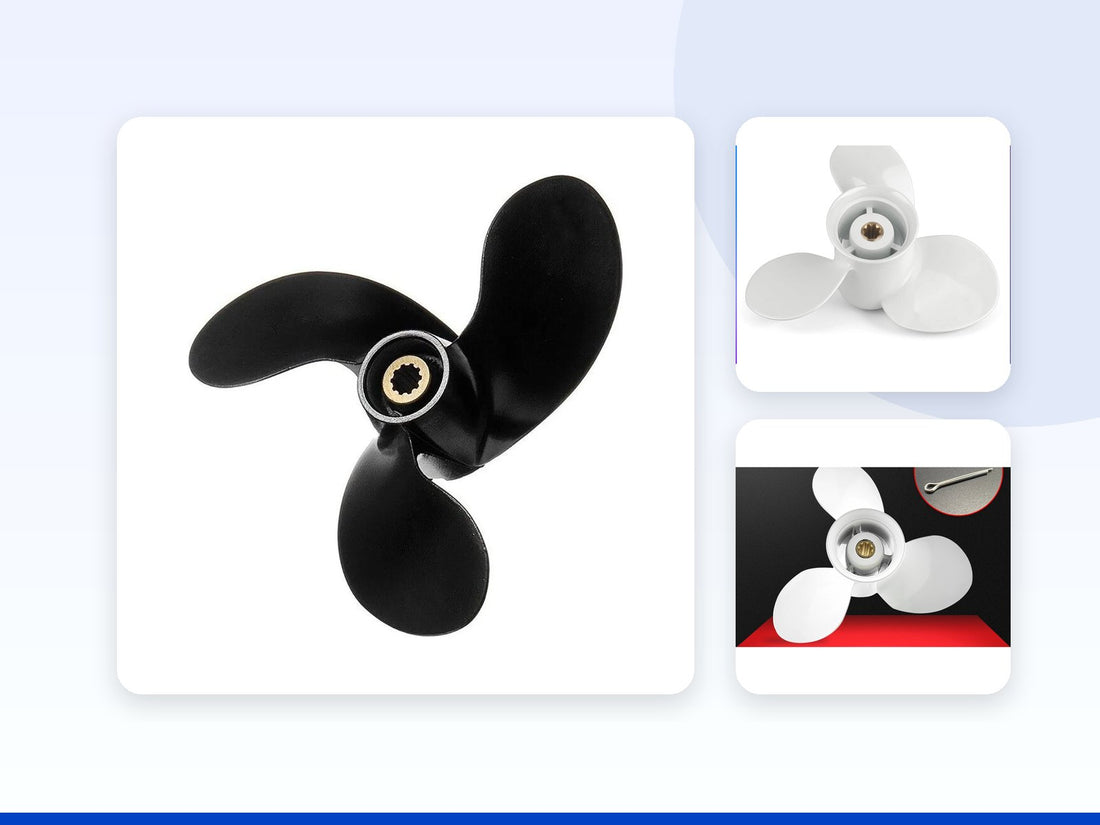
Propeller sizes are given as diameter × pitch, in inches. Diameter is the width of the circle the blade tips sweep. Pitch is how far the prop would move forward in one turn if it were screwing through something solid – a 13 inch pitch moves further per turn than an 11. The size is usually stamped on the hub or the side of a blade, often with the maker's part number. Our listings give both inches and millimetres, for example 9¼ × 11 in (235 × 279 mm).
Splines, hub fit and rotation
- Spline count: the propeller shaft has a set number of splines (teeth) that must match the hub – our props are 8-, 10- or 13-spline as listed. Count the splines on your shaft or inside your old prop's hub before ordering.
- Rotation: right-hand (RH) props turn clockwise seen from behind in forward gear, and they're the standard for single outboards. Left-hand props are for counter-rotating engines on some twin set-ups. All the props in this guide are right-hand.
- Hardware: our props don't include the nut, thrust washer or cotter pin – reuse your nut and thrust washer and fit a new cotter pin.
Compare all three – size, splines and rotation – with your old prop. If in doubt, send us a photo of its markings before ordering, and put your engine model in the order note so we can check it before dispatch.
Choosing pitch by wide-open-throttle rpm
Your engine maker gives a wide-open-throttle (WOT) rpm range in the owner's manual. The right pitch lets the engine reach that range with a typical load on board – fuel, gear and the usual number of people:
- Engine can't reach the range (or struggles to get a loaded boat on the plane): try less pitch.
- Engine over-revs past the top of the range: try more pitch.
- As a rough guide on our product pages, 1 inch of pitch changes WOT by about 150–200 rpm. Results vary with hull, load and conditions, so there's no guarantee a given pitch suits your boat.
That's why we list two pitches for the Yamaha 9.9–20 HP: the 9¼ × 10 is the lower pitch that helps a loaded boat get on the plane, while the 9¼ × 11 is a step up.
Aluminium or stainless steel?
| Aluminium | Stainless steel | |
|---|---|---|
| Price | Lower | Higher |
| Knocks and strikes | Bends or chips more easily | Stands up to knocks better |
| Typical use | Everyday props on small and mid-size outboards, and a spare on board | Owners wanting a tougher or performance prop |
| On our listings | Yes – the props in this guide | Not currently |
Propellers we have by engine
Every part below is an aftermarket replacement listed for the engines shown – not made or endorsed by the engine maker. Check the number on your old part or in your engine's parts manual, and put your engine model in the order note so we can check it before dispatch.
| Engine (as listed) | Size (diameter × pitch) | Splines | Rotation | Part number (as listed) |
|---|---|---|---|---|
| Suzuki 4–6 HP | 7½ × 6 in (188 × 135 mm) | 10 | RH | 58110-97JA0-019 |
| Yamaha 9.9, 15, 20 HP (incl. F9.9 2nd generation 2005 on, F15 2004 on) | 9¼ × 10 in (235 × 254 mm) | 8 | RH | 63V-45952-10-EL |
| Yamaha 9.9, 15, 20 HP (incl. F9.9, F15, 9.9/15 MSH) | 9¼ × 11 in (235 × 279 mm) | 8 | RH | – |
| Yamaha 20, 25, 30 HP with a 10-spline shaft (incl. F25) | 9⅞ × 13 in (251 × 330 mm) | 10 | RH | – |
| Yamaha 40, 48, 50, 60 HP with a 13-spline shaft | 11⅛ × 13 in (283 × 330 mm) | 13 | RH | 663-45945-02 |
Fitting and looking after your prop
- Take the kill-switch clip out and make sure the engine can't start before you touch the propeller.
- Grease the shaft splines with a marine grease, refit the thrust washer, the prop, the nut and a new cotter pin, following your engine's manual.
- Check for fishing line wrapped behind the prop – it can damage the gearcase seal.
- Carry a spare prop and the tools to fit it on longer trips.
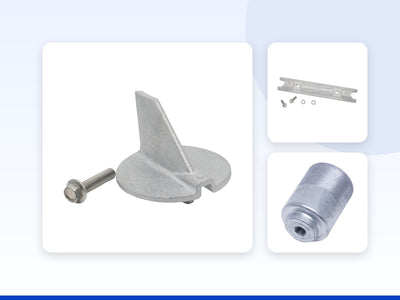
Overheating isn't a prop problem – if the tell-tale is weak, see our outboard impeller guide. Your trim tab anode sits just above the prop, so check it at the same time (outboard anode guide). Shopping for a particular boat? See shop by boat – parts for tinnies, trailer boats, inflatables and RIBs, kayaks and SUPs and yachts and launches.
Products in this guide


FAQs
What does 9¼ × 11 mean on a propeller?
It's diameter × pitch in inches: 9¼ inch diameter and 11 inch pitch. The size is usually stamped on the hub or the side of a blade.
How do I know how many splines my shaft has?
Count the splines (teeth) on the propeller shaft or inside your old prop's hub. Our props are listed as 8-, 10- or 13-spline – it must match exactly.
Should I go up or down in pitch?
Run the boat with a normal load at wide-open throttle. If the engine can't reach the rpm range in your owner's manual, go down in pitch; if it over-revs, go up. Our product pages use about 150–200 rpm per inch of pitch as a rough guide.
Is my outboard right-hand or left-hand rotation?
Most single outboards use a right-hand prop, which turns clockwise seen from behind in forward gear. Left-hand props are for counter-rotating engines on some twin set-ups. All the props in this guide are right-hand.
Does the propeller come with a nut and washer?
No – our props are the propeller only. Reuse your nut and thrust washer and fit a new cotter pin.
Shop outboard and engine parts
Prices and stock change often – check the product page for current details.
Products in this guide
Everything mentioned above, with current prices. Open a product for full specs and fitment details.